

From Disciplinary Society to Digital Control: Madness, Affects and Performativity
From Disciplinary Society to Digital Control: Madness, Affects and Performativity

TikTok: @kira.mila.bsh
The Ship of Fools, Hysterical images and POV Memes: Affective Politics from the Clinic to the Feed
Introduction
This paper proposes a reflection on the historical transition from the disciplined society to the society of control, as described by Foucault (1964/1998), focusing on the institutionalisation of madness and the role of the hospital as a disciplinary space, and connecting it to the digital circulation of affective subjectivities in technodigital society, where affects and difference are reconfigured and can be both regulated and performatively expressed. The approach adopts a feminist and affective perspective to analyse how certain bodies (especially female bodies) have been historically constructed as “uncontrolled,” vulnerable, or dangerous, and consequently subjected to institutional regulation. The reflection draws on authors such as Nietzsche, Foucault, Deleuze and Guattari to address the agony of the modern subject, the decline of metaphysics, and the transformation of disciplinary societies into societies of control. This theoretical base is complemented by Didi-Huberman’s Invention of Hysteria (2007), which examines the visual and medical construction of hysteria at the Salpêtrière hospital in the 19th century, as well as by bibliographies focused on digital culture and affect—such as Ahmed (2024), Abidin (2021), or Trillò (2024)—in order to link this history of bodily control to the contemporary algorithmic management of subjectivity. Parallel to the theoretical dimension, the paper draws on two personal research processes: on the one hand, my undergraduate thesis in anthropology on the affective performativity of memes on social media (Affective Performativity of the POV: A Digital Ethnography of a Meme on Instagram and TikTok, 2025); on the other hand, the creative process of POV, a performance I will premiere the upcoming 2026 in Barcelona, in which I bring the hysterical imagery of the Salpêtrière into relation with contemporary imaginaries of overflowing, vulnerable, or monstrous bodies in digital environments. This dialogue between academic research and artistic practice allows me to explore how imaginaries of disciplinary control are updated within technodigital dispositifs, and how performativity can function both as a space of control and of resistance.
This paper thus brings together three main axes: (1) the history of the representation of madness and institutional control of the body, (2) contemporary forms of technodigital control, and (3) the performativity of difference and affects, often culturally categorised as “bad affects.” This perspective makes it possible to understand how the transition from classical institutional control to the digital circulation of subjectivities opens simultaneous spaces of regulation and subversion, situating difference and affects at the centre of the tensions between contemporary power and subjectivity.
Critique of Identity and Metaphysics
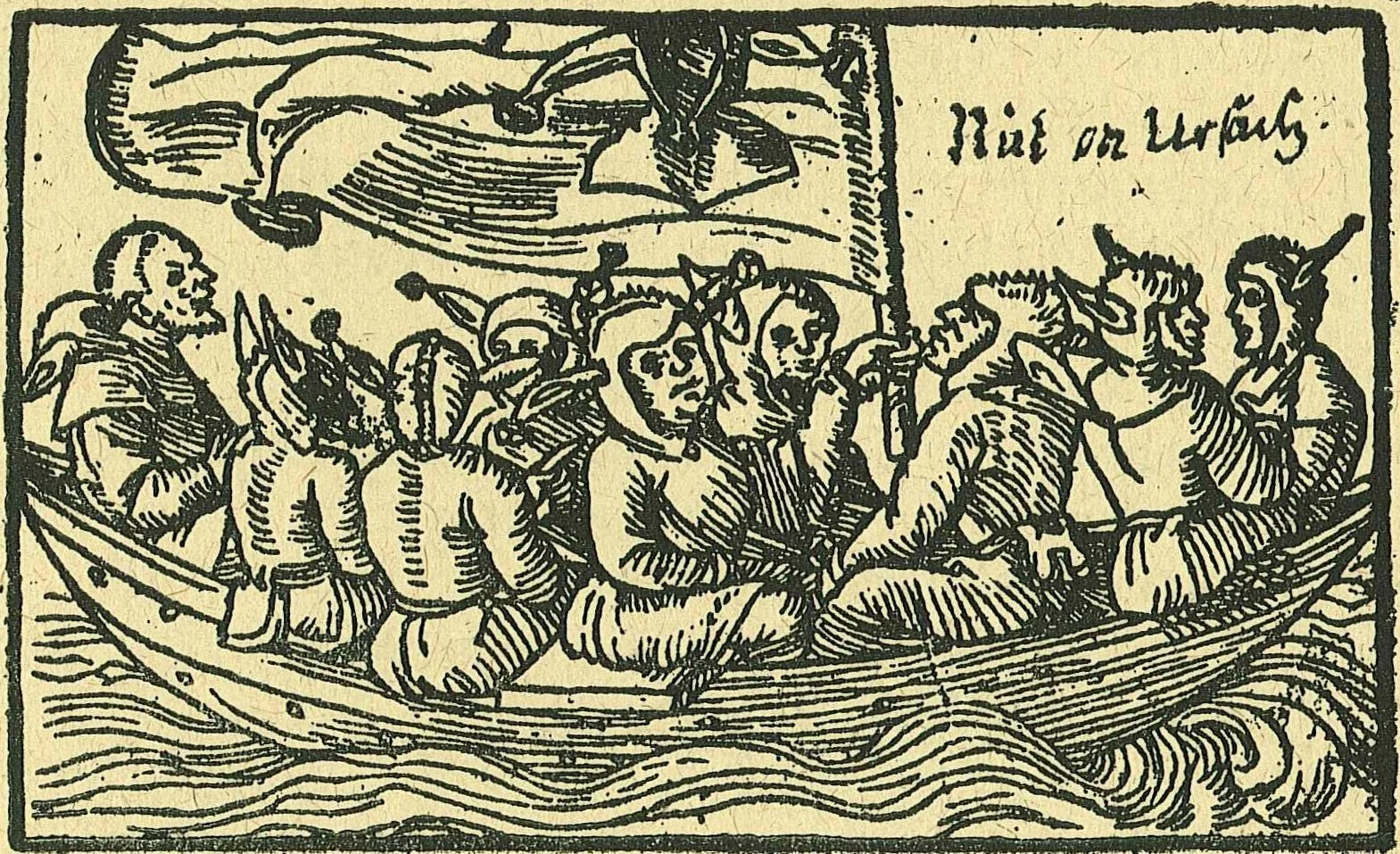
Stultifera Nauis. Chrzanowski, 1570. Font: clarklibrary
The tradition of Western thought, as analysed by Marina Garcés (El problema de la diferencia (2024,UOC), has been shaped by the search for a stable, rational, coherent subject, as well as by the idea that truth is that which can be identified, classified, and fixed. This metaphysical conception, which understands knowledge as the capacity to assign each thing an essence and a place within a hierarchical order of the world, contributed to building the image of the modern subject as a centre of reason and control. Within this framework, difference is relegated to an inferior position: whatever overflows, exceeds, or does not fit the norm is turned into deviation, pathology, or irrationality. The management of this difference took institutional form, as Foucault (1975) argues, especially in disciplinary dispositifs such as the hospital, which function as spaces for the regulation and normalisation of deviant bodies and affects.
For this paper, I focus on the example of the Salpêtrière (Paris, 19th century), where this logic is paradigmatically displayed: women diagnosed as “hysterical” were classified, photographed, and instructed to perform convulsions and poses for diagnosis and scientific spectacle, transforming their affects into symptomatology and their bodies into objects of knowledge (Didi-Huberman, 2007). This modern medicalisation extended a mechanism already present before the emergence of psychiatry. As Foucault shows in Madness and Civilization (1964/1998), the control of madness was initially symbolic and social: the mad person was expelled from the community and condemned to wandering. The image of the “ship of fools,” in which mad people are confined and sent to sea, condenses this paradoxical control: “encerrado en el navío de donde no se puede escapar, el loco es entregado al río de mil brazos [...] Está prisionero en medio de la más libre y abierta de las rutas” (Foucault, 1964/1998, p. 12). Madness is thus excluded from the social body while becoming an object of fascination: what is pushed aside is simultaneously observed as spectacle.
This modern construction of identity as a centre of rational control is decisively criticised in contemporary thought. As Garcés explains, referring to Nietzsche, Western metaphysics has created a fiction of universal truth and fixed essence of the subject, serving to maintain hierarchies and relations of power rather than to explore the plurality of life and affects. From this perspective, subjectivity is not a stable identity but a multiple, open process shaped by diverse forces. Thus, expressions historically interpreted as pathological (such as hysterical “overflowing”) can be read as manifestations of difference that disrupt normality and destabilise the rigid categories of the modern subject.
Deleuze and Guattari further develop this critique in A Thousand Plateaus (1980/2004), showing that power operates not only in institutions but also at the microscopic level of affects, perceptions, and everyday relations. They write: “everything is political but all politics is simultaneously macropolitics and micropolitics. The molar organisation […] does not prevent a whole world of unconscious micropercepts, unconscious affects, fine segmentations” (Deleuze & Guattari, 1980/2004, p. 218). Control, therefore, not only produces visible norms (as at the Salpêtrière) but also operates in the modulation of feeling, desire, and emotional expression.
Deleuze continues this critique in Postscript on the Societies of Control (1996), arguing that contemporary systems of power no longer operate through enclosed spaces (the hospital, the school, the factory) but through continuous circuits of modulation that seek to steer behaviour, affects, and forms of life. In this context, to think, create, or feel—Deleuze also argues in the lecture What Is the Creative Act? (1987/Los Dependientes, 2013)—is to escape mechanisms of control and invent new forms of existence.
Foucault reinforces this argument as well. In Discipline and Punish (1975), in the chapter Docile Bodies, he describes how discipline produces useful and submissive individuals through meticulous regulation of gestures, movements, and affects. The Salpêtrière is a clear example: the control of the hysterical body, the cataloguing of symptoms, and the production of images constitute a technology of power that manufactures madness as an object of knowledge while simultaneously suppressing the subjectivity of the patients. This logic of control has not disappeared; it has simply moved elsewhere. In the technodigital society of control, emotional and affective modulation occurs through networks and algorithms that regulate what can be expressed, what can be seen, and what forms of difference are acceptable.
Thus, the critical articulation of Garcés, Deleuze, Guattari, and Foucault, applied to the case of the hysterics, shows that the agony of the modern subject results from an attachment to identity as a fixed centre of control and to a system that excludes difference and non-normative affects. But this same critique opens the possibility of emancipatory thought: recognising difference, plurality, and affective performativity as central axes of a subjectivity capable of challenging norms and creating new imaginaries of life and relation.
Transformation of Subjectivity from the 1960s and 1970s Onward
In the previous section, I explained how difference and affects were historically subjected to disciplinary mechanisms intended to preserve the modern identity as a centre of control. In this section, I examine how, from the 1960s and 1970s onward, a period emerges that breaks with the model of disciplinary society described by Foucault (1975): traditional institutions (family, school, factory, hospital) cease to be conceived as unquestionable frameworks of order and socialisation, and a critique arises that demands new forms of life, relation, and subjectivity.
Student, feminist, anticolonial, queer, and sexual liberation movements from the 1960s challenge both institutional forms of control and affective norms. As Ahmed (2004) shows in The Cultural Politics of Emotion, affects are not private states but sociocultural phenomena: they circulate, they are learned, and they define who belongs and who is excluded. What changes during these decades is that affects cease to be read solely as symptoms of individual distress and begin to be understood as spaces for political claims and for a more fluid and collective identity.
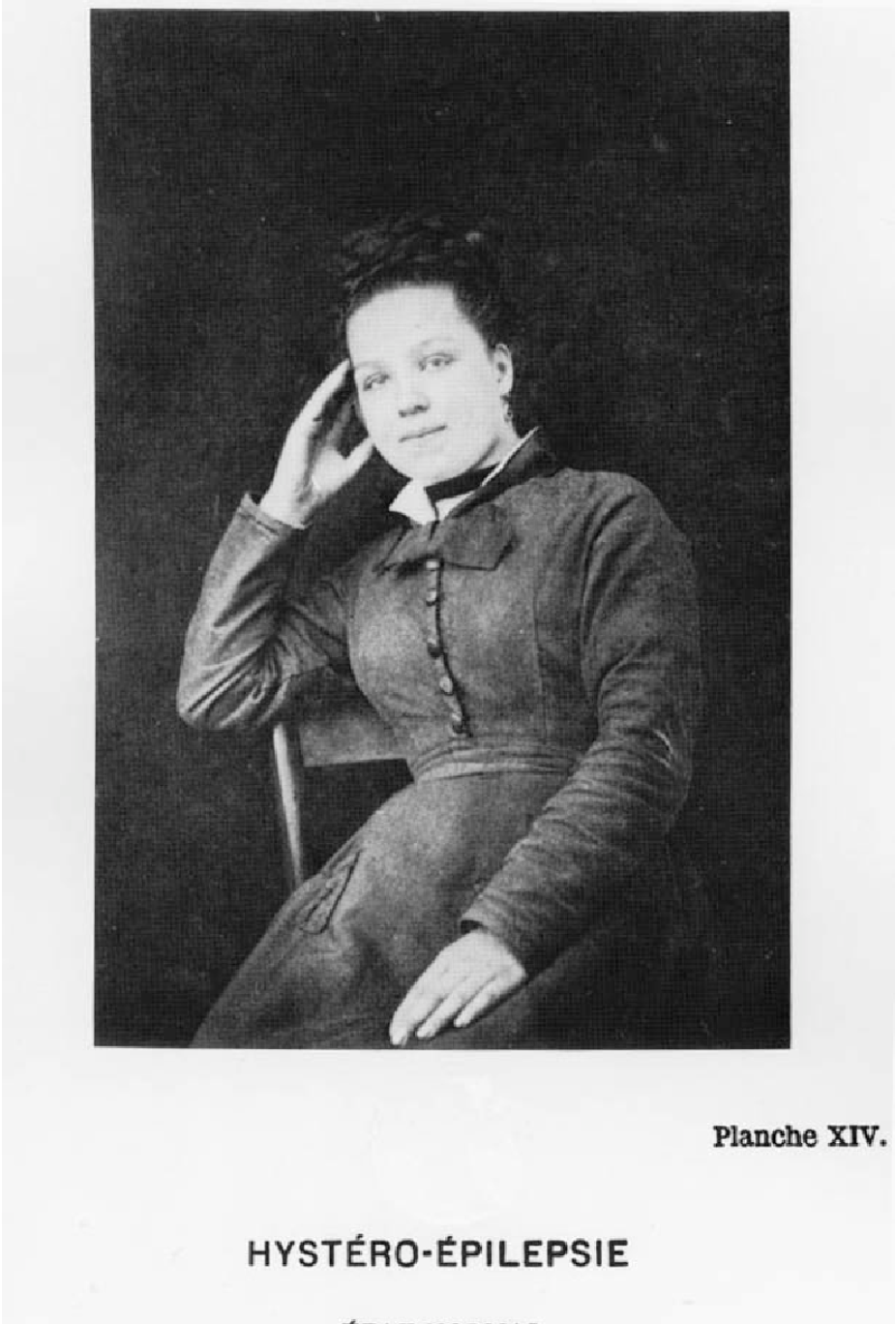



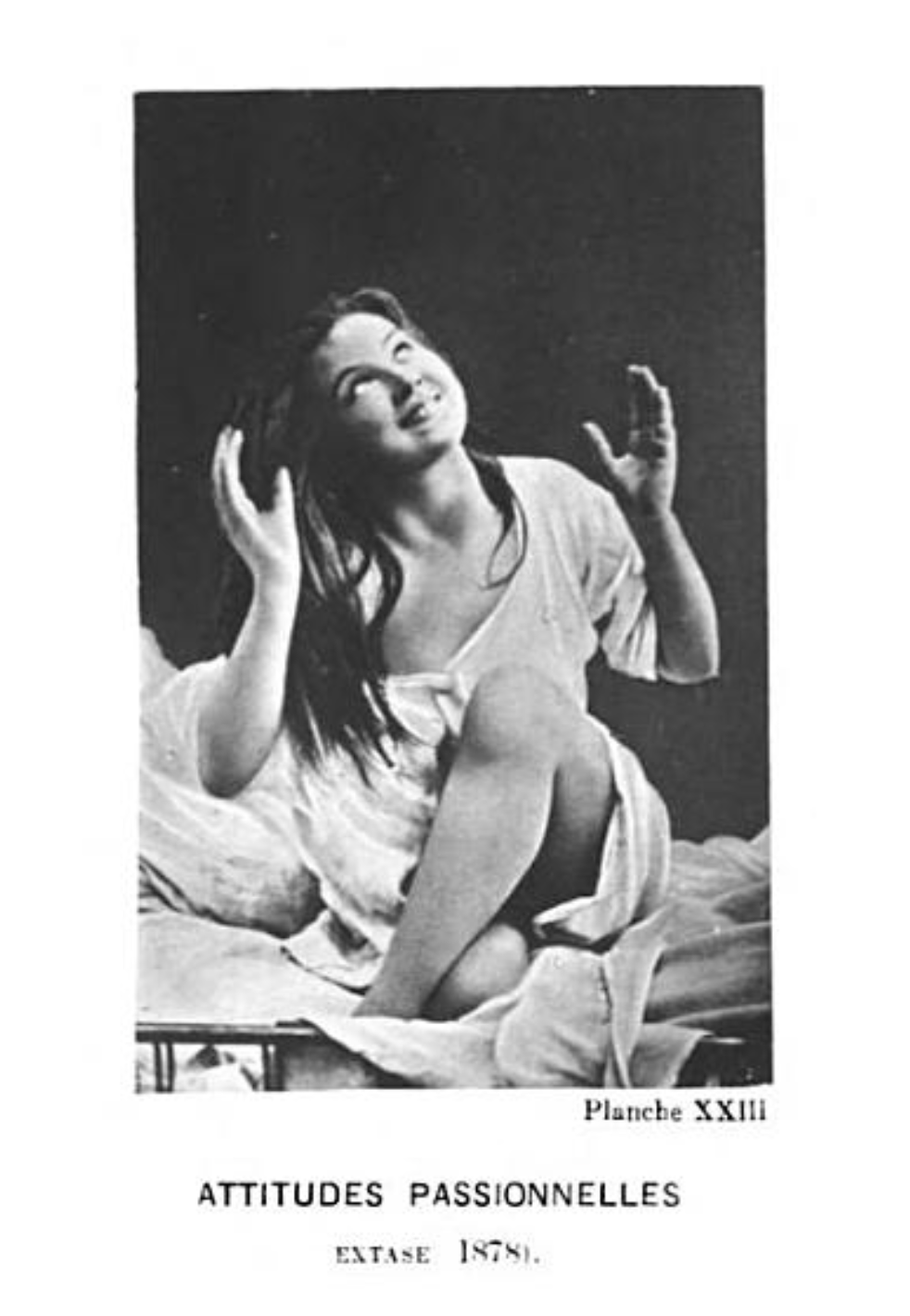
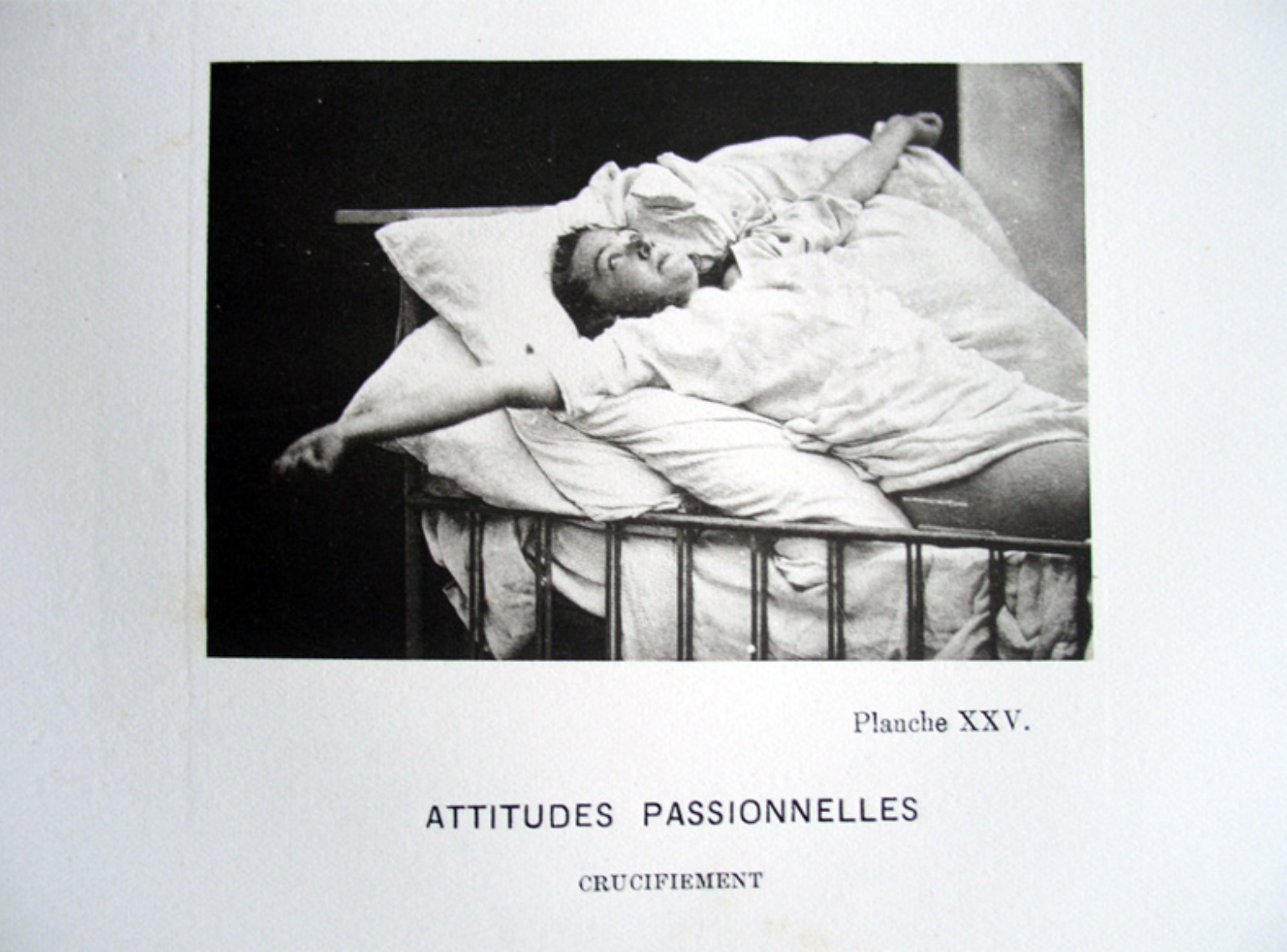
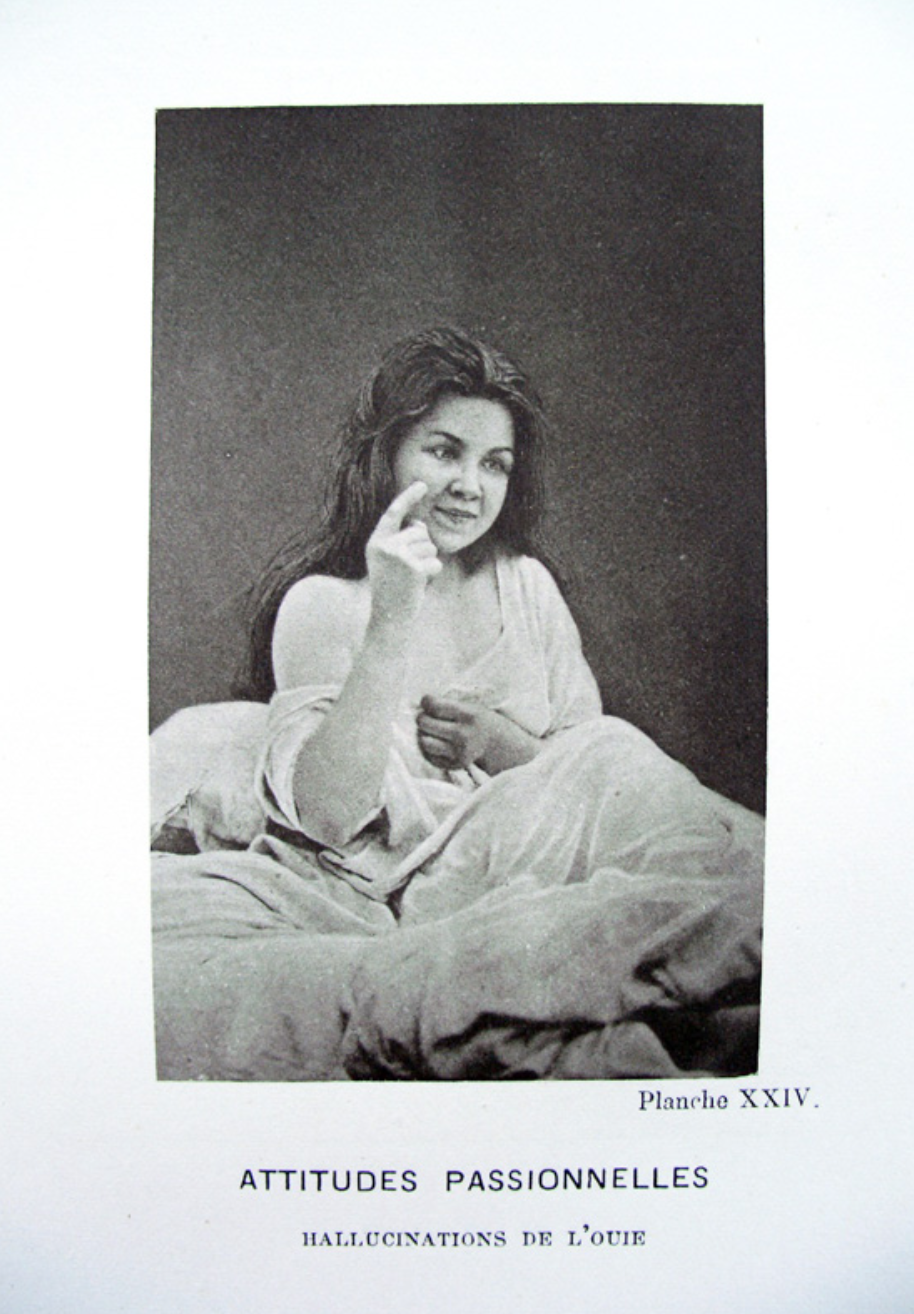
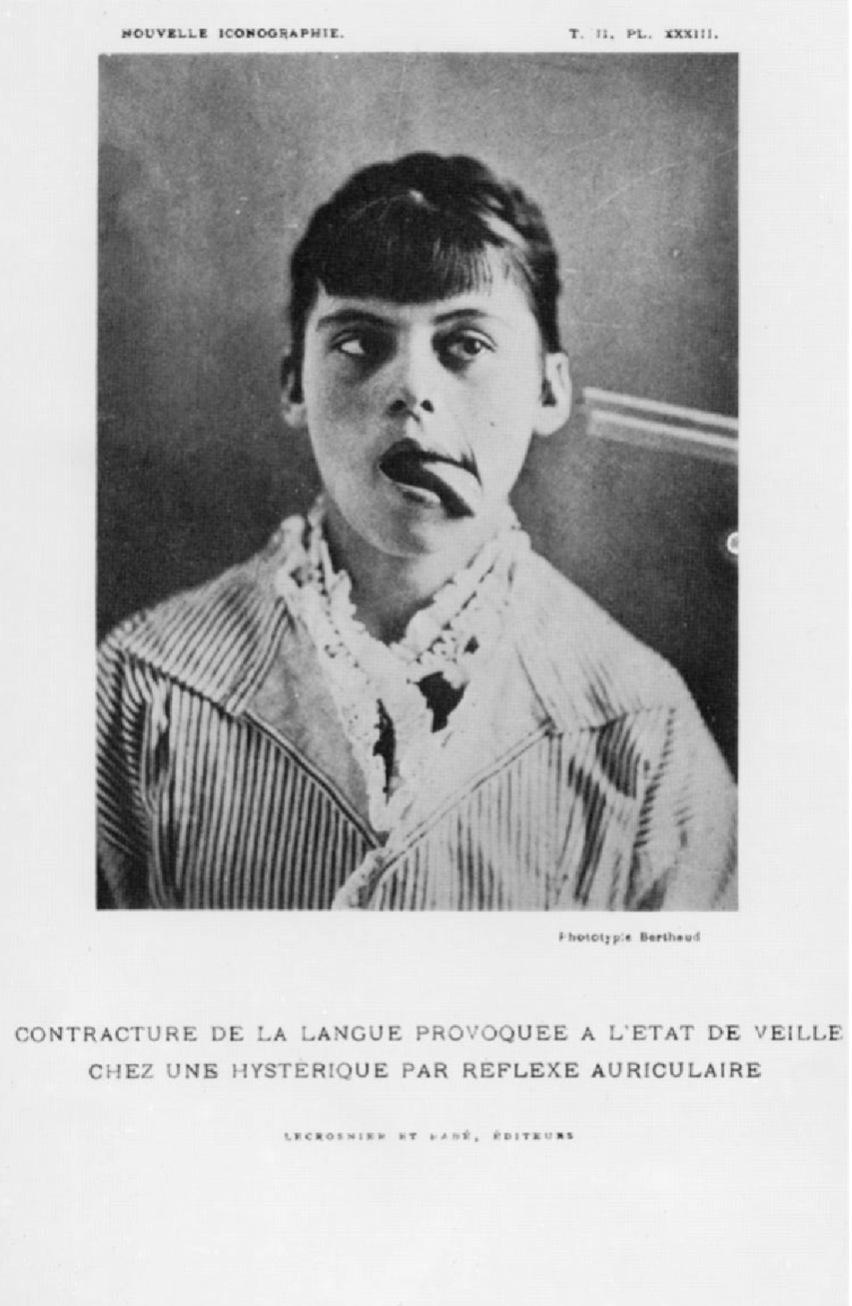
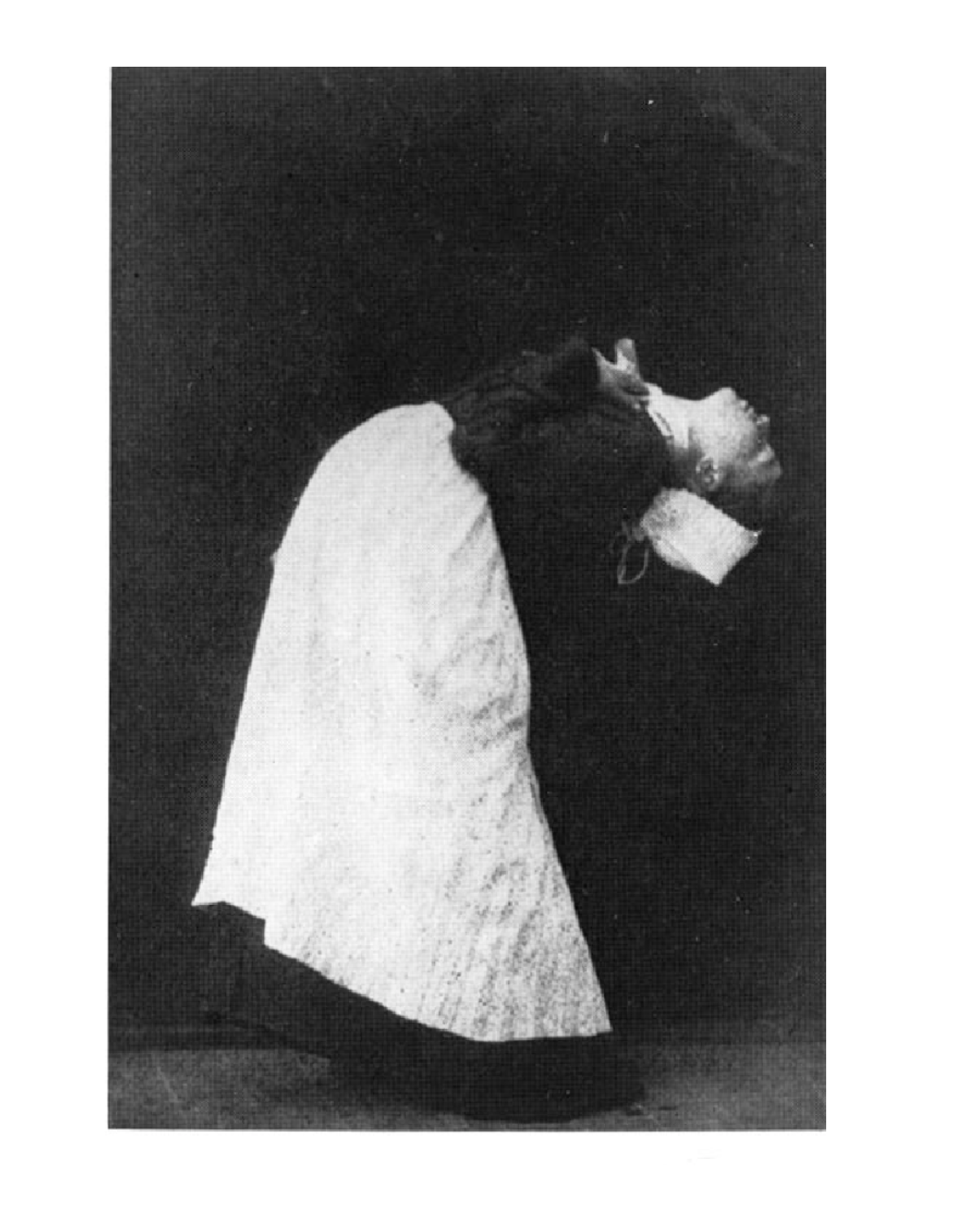
As Didi-Huberman (2007) explains, the hysterics of the Salpêtrière, through the clinical images generated by Charcot, although functioning as instruments of control and medical judgement, also reveal unresolved tensions between discipline, institution, expressivity, and subject. The hysteric does not speak, but her body acts; her body says what discursive order does not allow to be said. This interpretation makes it possible to read the hysterics as proto-figures of affective performativity: their dramatization was at once imposed and strategic, a way of making suffering exist within a system that only recognised pain once it had been transformed into image. Didi-Huberman (2007) expresses this clearly: “Hysteria was, throughout its history, a pain that was forced to be invented as spectacle and as image” (p. 11).
This genealogy dialogues with the Ship of Fools analysed by Foucault (1964/1998), who shows how difference was controlled through expulsion while simultaneously becoming spectacle. The mad person, cast out from the community and set adrift, was simultaneously an excluded and an observed body. This logic of forced wandering and controlled visibility reappears today in other liminal figures: refugees, migrants, or war-displaced people are turned into “uncontrolled” bodies in the literal sense (bodies in motion, often represented as threats) while their images circulate endlessly through media and social networks. The continuous transmission of violence (as in the case of the genocide in Palestine) transforms suffering into political and emotional spectacle, generating empathy and alarm simultaneously, and allowing certain discourses to use the movement of such bodies to justify walls, borders, and security policies.
The paradox reappears, then, in the digital ecosystem: difference is symbolically expelled yet kept in circulation as image. Just as the Ship of Fools physically separated madness from the community through exile, and just as the Salpêtrière confined it in an institutional space to observe it, diagnose it, and turn it into image, digital platforms symbolically separate “uncomfortable affects” from normative social life. They displace them into specific circuits of circulation (such as the meme), where emotional overflow is tolerated but without putting at risk the public order of affective positivity. Digital culture does not eliminate affective difference: it keeps it visible, but contained.
In this context, affective performativity can become a tool of symbolic resistance. In my undergraduate thesis, I analysed how memes on Instagram and TikTok (particularly POV memes) function as surfaces for the collective expression of distress, vulnerability, and failure through humour and post-irony, in dialogue with recent work on affect and memetic performativity (Guiu Sagarra, 2025; Trilló, 2024; Lymarev, 2023). This overflowing affective expression recalls the hysterical gestures of the Salpêtrière: in both cases, the body (or the image of the body) speaks what the institution refuses to hear. Prohibited or repressed affects emerge as cultural critique, generating imaginaries that destabilise social and identity norms. This transformation in forms of subjectivity and resistance can also be read through Deleuze and Guattari’s proposal on segmentarity. In A Thousand Plateaus (1980/2004), the authors argue that modern life has not eliminated social segmentation but has “intensified it,” distinguishing between a “primitive and flexible” segmentarity and a “modern and rigid” one (p. 212). Digital platforms are a contemporary example: they give users a sense of agency and free circulation, while algorithmic architectures organise which affects, discourses, and forms of subjectivity obtain visibility and which are relegated to the margins. At the same time, Deleuze and Guattari propose the concept of the “war machine” as a collective, creative force. From this perspective, both hysterical performativity and memetic performativity can be read as forms of flight: dramatizations that, precisely because they exceed the norm, invent or make visible alternative ways of living and feeling.
The political character of affect also transforms in this period. What changes is not that subjectivity ceases to be regulated, but that regulation is no longer exclusively institutional and shifts into the social and cultural realm. Emotions become a terrain of public negotiation, struggle, but also commodification. In this sense, the transformations of the 1960s and 1970s do not close the critique of the disciplinary model; they open a field of inquiry that leads to the technodigital society of control: a system in which the production and modulation of affects are articulated through algorithms, visibility, and attention—an issue developed in the following section.
Difference and Power: The Current Relationship
In the contemporary context, difference is no longer perceived merely as an identity attribute but as a fundamental condition of subjectivity. Technodigital societies operate through forms of modulable control in the sense proposed by Deleuze (1996) in the Postscript on the Societies of Control. That is, they do not demand bodies enclosed in institutions but subjectivities continuously connected, monitored, and addressed. Power acts by capturing data, modulating behaviours, anticipating imaginaries, and reorganising visibilities through algorithms. As Ahmed (2004) and Abidin (2021) show, emotions have become a matter of sociocultural and economic governance: what we feel, show, and share determines our value and public existence. In this scenario, difference becomes both an object of regulation and a possibility for resistance.
The contributions of Deleuze and Guattari help illuminate this double dynamic. In A Thousand Plateaus (1980/2004), as previously discussed, they distinguish between flexible and rigid segmentarity. On the surface, digital platforms belong to the realm of flexible segmentarity: the user can create identities, circulate, play, perform. But this freedom operates within an invisible, rigid segmentarity: algorithms classify, order, and hierarchise subjects according to affective, aesthetic, and behavioural patterns.
Difference is recorded, archived, and converted into operative data. Deleuze and Guattari identify the “war machine” as a creative force capable of escaping (even partially) the logics of control. This war machine is not military but aesthetic, collective, and inventive: actions, gestures, imaginaries, affects, and ways of life that overflow established codes. In technodigital culture, this force takes shape through practices such as memes or postdigital irony (Lymarev, 2023).
Memes contain a disruptive force that operates through ridicule, irony, hyper-affectivity, and post-irony. They do not merely express distress: they dramatise it, transform it, turn it into collective language. This relation between affective excess and social critique allows us to read memetic irony in continuity with historical figures such as the “madman” and the “hysteric.” In the Ship of Fools, as Foucault describes, the madman reveals inconvenient truths through satire and dislocation, becoming “the deception of deception” (Foucault, 1964/1998). At the Salpêtrière, hysterical pain becomes image and dramatization, revealing what the institution seeks to silence. As Didi-Huberman states: “hysteria was, throughout its history, a pain that was forced to be invented as spectacle and as image” (2007, p. 11). Queer culture has also turned this mechanism into a political strategy: excess, parody, dramatic intensity, and hyperbole expose the norm as fiction and thus render it vulnerable. In the digital ecosystem, the meme resumes this parodic force. Humour does not neutralise distress: it renders it thinkable. If hysteria dramatized pain to survive the clinical regime, the meme dramatizes distress to survive the neoliberal emotional regime. What the modern subject sought to expel (excess, drama, vulnerability, affect) returns today as a form of digital community.
In my undergraduate thesis (Guiu Sagarra, 2025) I examine how POV memes function as liminal spaces of emotional survival on platforms such as TikTok and Instagram, where irony, hyper-affectivity, and performativity create community through shared fragility and distress. These digital practices resemble the hysterical iconography of the Salpêtrière in a fundamental sense: they are spaces where the body (or its image) says what the institution refuses to hear. Technodigital platforms reproduce, in new forms, the historical tension between institutional control and affective expression. If the disciplinary hospital embodied the will to normalise the overflowing body, social networks embody today the will to modulate affective visibility through virality, emotional profitability, and algorithmic prediction. But just as hysterical patients performed gestures that partially escaped the medical dispositif, today’s users generate micro-fugues, aesthetics, and imaginaries that overflow the neoliberal logic of emotional success and obligatory happiness. In this sense, difference (understood as that which does not fit, that which expresses itself in overflowing, affective, vulnerable, or unpredictable ways) continues to be a space from which to challenge contemporary structures of power. Technodigital subjectivity is simultaneously captured and escaping, modulated and creative, governed and inventive.
Conclusions
Throughout this paper, I have articulated a trajectory from disciplinary society to the society of control, showing how difference and affects have historically been managed as problems but also as sources of resistance. From the Ship of Fools to the Salpêtrière, the figures of the madman and the hysteric have been constructed as dangerous alterities, expelled or captured in institutional dispositifs that codified their bodies and their pain. The readings of Foucault (1964/1998, 1975) and Didi-Huberman (2007) have allowed us to understand that madness and hysteria are not merely medical categories but stages where the limit of what can be said, seen, and recognised is contested.
With the transformations of the 1960s and 1970s, a new scene opens in which affects cease to be only an object of correction and become spaces for politicisation and community (Ahmed, 2004). Hysterics can be re-read as proto-figures of affective performativity, and the genealogy of madness as an archive of forms of excess that challenge the modern identity. At the same time, the passage from discipline to control (as proposed by Deleuze and Guattari) shows that power does not disappear but mutates, shifting towards increasingly subtle and omnipresent forms of segmentarity and modulation.
In the present technodigital moment, memes and affective practices online reactivate these tensions. On the one hand, algorithms capture and order difference, converting emotional life into data. On the other hand, ironic performativity, hyper-affectivity, and queer aesthetics produce micro-fugues, communities, and imaginaries that overflow the norm and allow the sharing of discomforts that the modern subject sought to hide. In this sense, difference and “bad affects” are not merely remnants of an old order but raw materials for imagining other ways of living, of embodying, and of relating. The agony of the modern subject, far from being a pessimistic diagnosis, can be understood as the opening of a field of possibility: freeing ourselves from the fiction of a stable, autonomous, self-sufficient self allows us to imagine multiple, vulnerable, relational subjectivities. Understanding how power operates on difference and affects (in hospitals, in disciplinary institutions, but also in digital platforms and algorithms) is a condition for intervening in it. From this perspective, affective performativity—both in the history of hysteria and in contemporary memetic culture—emerges as a space for thinking and practising forms of emancipation that do not deny conflict but make it visible.
Abidin, C. (2021). Mapping internet celebrity on TikTok: Exploring attention economies and visibility labours. Cultural Science Journal, 12(1), 77–103. https://doi.org/10.5334/csci.140 Ahmed, S. (2004). La política cultural de las emociones. Introducción: Sentir el propio camino (pp. 19–47). Edinburgh University Press; Programa Universitario de Estudios de Género, Universidad Autónoma de México. Butler, J. (1990). Gender trouble: Feminism and the subversion of identity. Routledge.
Bibliography Deleuze, G., & Guattari, F. (2004). Cap. 9: Micropolítica y segmentariedad. En Mil mesetas: Capitalismo y esquizofrenia (pp. 213–237). Pre-Textos. ISBN 9788485081950.
Deleuze, G. (1996). Post-scriptum sobre las sociedades de control. En G. Deleuze, Conversaciones (1972–1990) (pp. 277–286). Pre-Textos.
Didi Huberman, G. (2007). La invención de la histeria. Fondo de Cultura Económica. Foucault, M. (1964/1998). Historia de la locura en la época clásica. Primera Parte (pp. 5-118) Fondo de Cultura Económica.
Foucault, M. (1975). Cuerpos dóciles. En Vigilar y castigar (pp. 135-169). Siglo XXI. Garcés, M. (2024). El problema de la diferencia. Universitat Oberta de Catalunya. Material docent.
Guiu Sagarra, N. (2025). Performativitat afectiva del POV: etnografia digital d’un mem a Instagram i TikTok. Los Dependientes. (2013, 3 julio). Gilles Deleuze – ¿Qué es el acto de creación? [Vídeo]. YouTube. https://www.youtube.com/watch?v=dXOzcexu7Ks
Lymarev, A. (2023). The secret third thing: A pragmatic analysis of post-irony and post-ironic internet memes. Oslo University. Trillò, T. (2024). PoV: You are reading an academic article. The memetic performance of affiliation in TikTok’s platform vernacular. The Hebrew University of Jerusalem, Israel.